Pipe leaks and supply line breaks
Pressurized water can saturate cavities quickly. We focus on locating the wet footprint, opening only what is needed, and drying structural members before finishes go back.
Serving Buffalo, New York & surrounding areas
Mold Removal Buffalo is a local mold removal and water restoration team serving Buffalo and Western New York. The same people handle both sides of the job, and this page explains how we work and what our water restoration service covers.
Call Now 716-274-9214If you are searching for water restoration Buffalo NY, you are likely dealing with a leak, overflow, or storm water that has moved fast through carpet, trim, drywall, and subfloors. The first goal is simple: stop the loss and remove water. The next goal is less visible but just as important: dry the structure to the right target, then repair what water damaged.
Our team provides water restoration and mold removal in Buffalo with a practical approach: documented moisture readings, controlled drying, and repairs planned around what actually got wet. You get a written scope, realistic timing, and straightforward answers about what can be dried and what needs to be removed.
In Buffalo, water damage often shows up in basements, first-floor walls, and around older plumbing. Freeze-thaw cycles, ice damming, and sudden thaws can also drive water where you do not expect it. Whether the source is a supply line, a drain backup, or weather-driven intrusion, the work sequence stays the same: extract, demo only what is necessary, dry, verify, and rebuild.
Water restoration is more than drying a wet carpet. It is a coordinated set of steps designed to prevent secondary damage like swelling wood, delaminated flooring, rusted fasteners, and microbial growth.
Common restoration tasks
Why verification matters
Drying is not finished because the room looks dry. It is finished when readings confirm the affected materials have returned to an appropriate moisture level for their type. That is what reduces the chance of hidden dampness staying trapped behind baseboards or inside wall cavities.
If a water event has already led to visible growth or a persistent musty smell, mold remediation may also be appropriate once the source is corrected and the structure is dry.
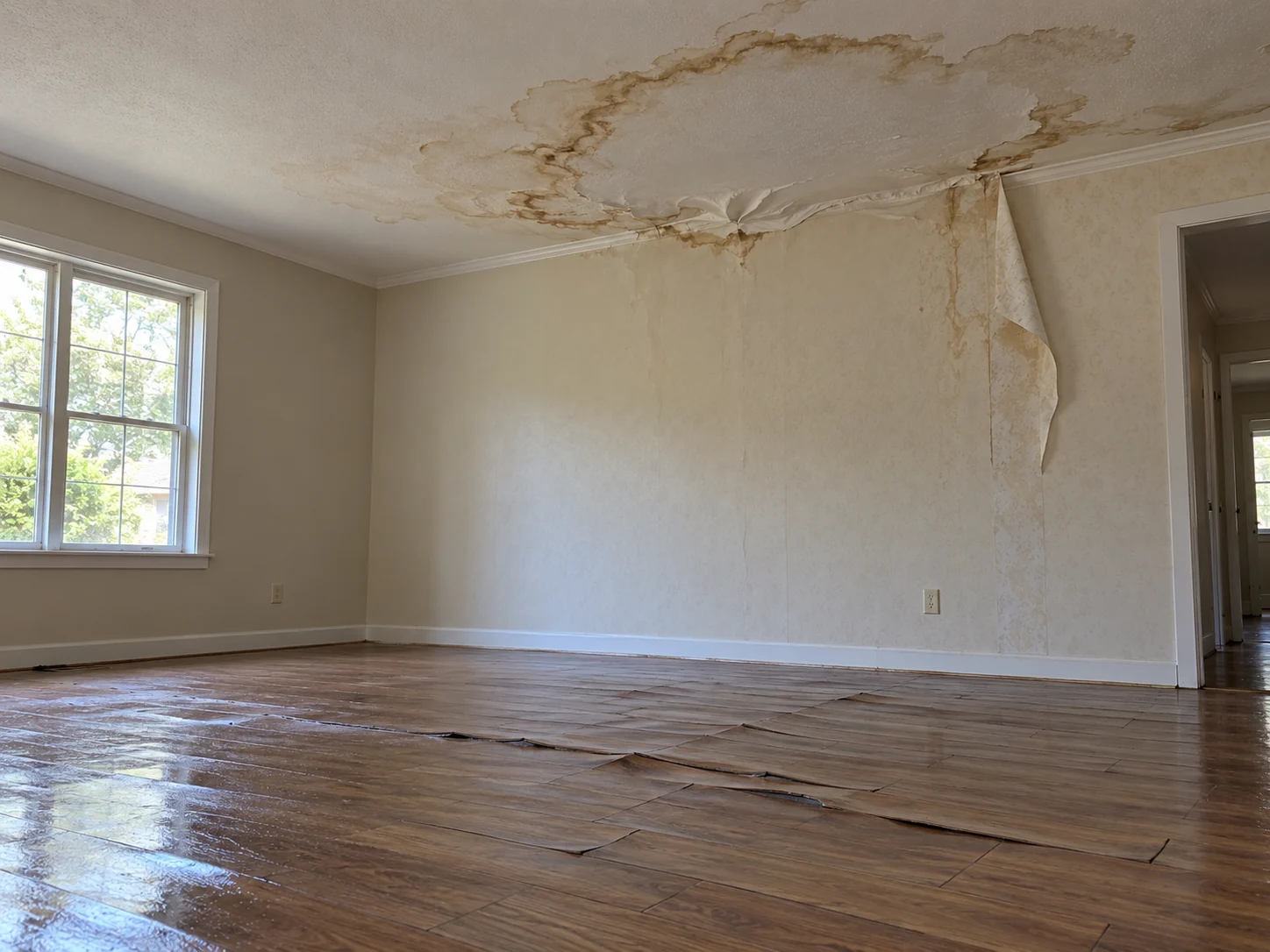
Pressurized water can saturate cavities quickly. We focus on locating the wet footprint, opening only what is needed, and drying structural members before finishes go back.
Dishwasher, washing machine, toilet, and tub overflows often reach adjacent rooms and under flooring. We check transitions, baseboards, and subfloors for trapped moisture.
Basements can hold moisture in concrete and framing. Drying plans need the right dehumidification and airflow so the space does not rebound after equipment is removed.
Ceilings and insulation can hide wet areas. We map the spread, remove compromised insulation when necessary, and dry framing to verified targets before repairs.
Offices, retail, and light industrial spaces often need after-hours coordination to reduce downtime while keeping drying equipment secure and effective.
The work moves from source control and moisture mapping through extraction, verified drying, and repair.
Call Now 716-274-9214We start with safety and containment: identify active leaks, shut down water sources when appropriate, and note any electrical risks around wet materials.
We measure where water traveled, including behind baseboards and under flooring. You receive a clear scope based on what is wet, not guesswork.
Standing water comes out first. Then we remove materials that cannot be dried in place or would trap moisture, such as heavily saturated drywall or swollen composite flooring.
We set air movement and dehumidification to match the materials and room volume, and we track progress with repeat readings so drying stays on course.
Once dry targets are met, we address residues and odor as needed, then complete repairs so the space is returned to normal use.
Older housing stock and mixed construction types mean moisture can behave differently from one property to the next. Plaster walls, multiple flooring layers, and finished basements can all slow down drying and increase the need for careful moisture mapping.
Neighborhood layout matters too. In Allentown and Elmwood Village, tighter lots and on-street parking can affect equipment staging and access, so we plan load-in and debris removal to keep disruption low. In North Buffalo, many homes have basements and older plumbing runs where leaks can travel along joist bays before showing up. Downtown Buffalo and the waterfront corridor include more multi-unit buildings and commercial spaces where shared chases and neighboring units require coordination and clear documentation.
Buffalo winters add their own complications. Freeze-related pipe failures and ice-dam leaks often show up suddenly and can soak insulation and framing. Those materials do not dry reliably without the right airflow and dehumidification strategy, and wet insulation typically needs removal to prevent moisture from staying trapped against wood.
Water restoration in Buffalo typically ranges from about $1,500 to $7,500, with small, contained losses near the low end and multi-room or basement losses with demolition and repairs reaching $10,000+ in some cases. A straightforward extraction and dry-out is usually less than a project that involves removing drywall, insulation, flooring, and rebuilding finishes.
Your final price depends on the category of water, how far it spread, how long materials stayed wet, what has to be removed to access wet cavities, and how many days of drying equipment are required. Exact costs are confirmed after an on-site inspection and moisture mapping.
Call Now 716-274-9214Tell us what happened and where the water reached. We will inspect, map moisture, and lay out the next steps for cleanup, drying, and repair for your Buffalo property.