Basement seepage and puddling
Water entering at a wall crack, floor joint, or window well can soak framing and stored belongings. We extract, dry, and document moisture conditions so you know what is truly affected.
Serving Buffalo, New York & surrounding areas
If you have water in your basement, a ceiling stain spreading, or wet drywall after a leak, fast drying matters. Our local team responds quickly with moisture mapping, professional extraction, and controlled drying to protect your home and reduce mold risk.
Call Now 716-274-9214Water damage restoration in Buffalo, NY is the full process of stopping the water source when possible, removing standing water, drying the structure, and restoring affected materials safely. The goal is to return the space to a clean, dry condition without trapping moisture inside walls, floors, or insulation.
Time is the big factor. Water can migrate through baseboards, under flooring, and into cavities where you cannot see it. Many Buffalo homes have basements and mixed materials—including older plaster, wood lath, newer drywall, and layered flooring—that can hold moisture and create hidden damage if drying is delayed or incomplete.
A proper restoration plan is based on measurements, not guesswork. We use moisture meters and thermal imaging to map wet areas, then set drying equipment according to room volume, temperature, and the materials involved. Dehumidification and air movement are managed together so moisture is pulled out of the structure instead of pushed deeper.
If you are concerned about microbial growth during or after a water loss, our team can coordinate appropriate containment and mold removal in Buffalo when conditions warrant it.
Water entering at a wall crack, floor joint, or window well can soak framing and stored belongings. We extract, dry, and document moisture conditions so you know what is truly affected.
Slow leaks behind cabinets or in ceilings can saturate insulation and drywall. We locate the wet footprint with moisture mapping, then dry cavities correctly before rebuild work begins.
Toilets, tubs, and drains can introduce contaminated water. We remove damaged porous materials when needed and clean and disinfect hard surfaces before drying and repairs.
Water stains, wet attic insulation, and ceiling sagging need immediate drying and safe material removal when compromised. We focus on preventing secondary damage as the leak is addressed.
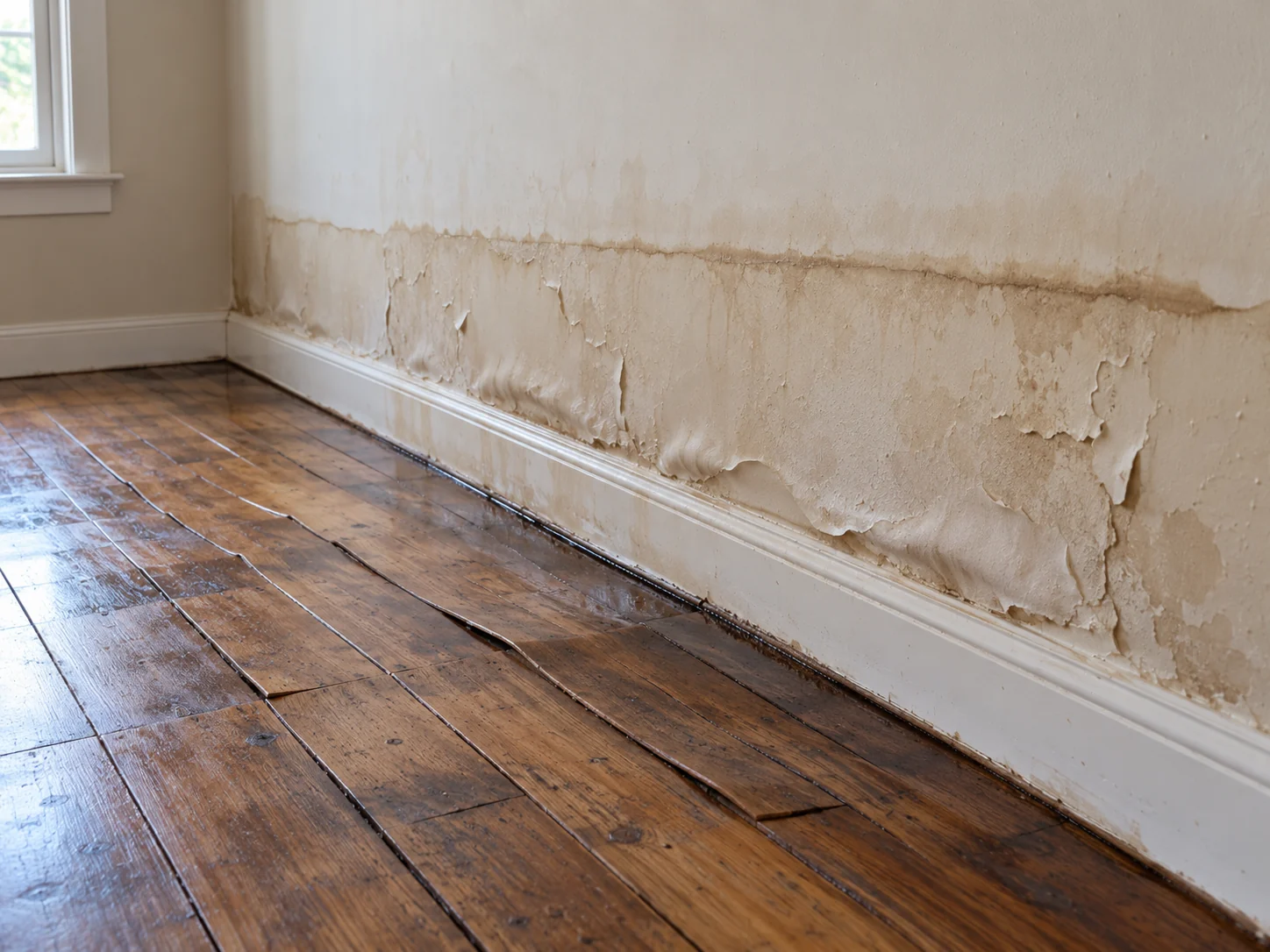
Water can travel under laminate, hardwood, and tile edges. We check subfloors and perimeter walls so drying targets the wet structure, not just the surface.
Musty smells often mean moisture remains in cavities or materials that never dried. We verify dryness with readings and adjust the drying plan until targets are met.
Every loss looks different, but the fundamentals stay the same: measure, remove water, dry in a controlled way, then confirm.
We start by identifying the water category and the most likely paths it took through the building. That informs what materials can be dried in place and what should be removed for safety. We document baseline moisture readings and create a drying plan that matches the space.
Air movers, dehumidifiers, and containment are placed to control humidity and airflow, with special attention to basements and lower levels where damp air can linger.
Drying is not finished when the surface feels dry. We re-check moisture levels in framing, subfloors, and wall cavities. If readings are not trending down as expected, we adjust equipment placement, increase dehumidification, or open assemblies for access.
Buffalo housing stock ranges from older homes with plaster and dense trim details to newer builds with modern drywall systems. These materials dry differently, which is why measurement and verification matter.
When restoration includes removal and rebuild, we keep the sequence tight: dry first, then repair. That reduces the chance of sealing moisture behind new finishes.
We assess safety, remove water, map moisture, manage drying conditions, and verify that the structure is ready for repairs.
Call Now 716-274-9214We look for active water sources, electrical hazards, ceiling sagging, and contamination concerns, then set a plan for safe entry and work zones.
Standing water is removed first. If porous materials are contaminated or structurally compromised, we remove them in a controlled way to open access for drying.
We record moisture readings and map affected areas, then place air movers and dehumidification to drive moisture out of the structure without spreading contamination.
Drying conditions change as materials release moisture. We monitor temperature, humidity, and moisture content and adjust airflow and dehumidification until targets are reached.
We clean and, when appropriate, apply antimicrobial treatments based on conditions. Once dry standards are met, the space is ready for repairs and finishing.
Water damage restoration in Buffalo typically ranges from $900 to $4,500 for a small to mid-size loss, while larger multi-room losses, contaminated water events, or projects needing significant demolition and rebuild often run $6,000 to $20,000+.
Your final price depends on how far water traveled, the category of water, the materials affected, access to wet cavities, and how many days of equipment and monitoring are needed. Exact cost is confirmed after an on-site inspection and moisture mapping.
Call Now 716-274-9214Tell us what happened and what areas are affected, and we will schedule an on-site assessment in Buffalo to map moisture, explain what needs to be removed versus dried in place, and outline the next steps for safe restoration.